Sustainability
Efficiency and environmental performance point the same way.
The operational changes that increase repair output also reduce travel, idling and repeat intervention. That alignment is the honest basis of our environmental position.
What this page does not claim. We do not publish carbon figures, reduction percentages or environmental certifications, because we have no operational data to calculate them from and no certifications yet held.
What follows is the mechanism by which the delivery model reduces environmental impact, and the measures we report against once a programme is running.
Mechanism
Where the reduction actually comes from.
Not from offsetting or from statements of intent, but from removing journeys, idle time and rework from the programme.
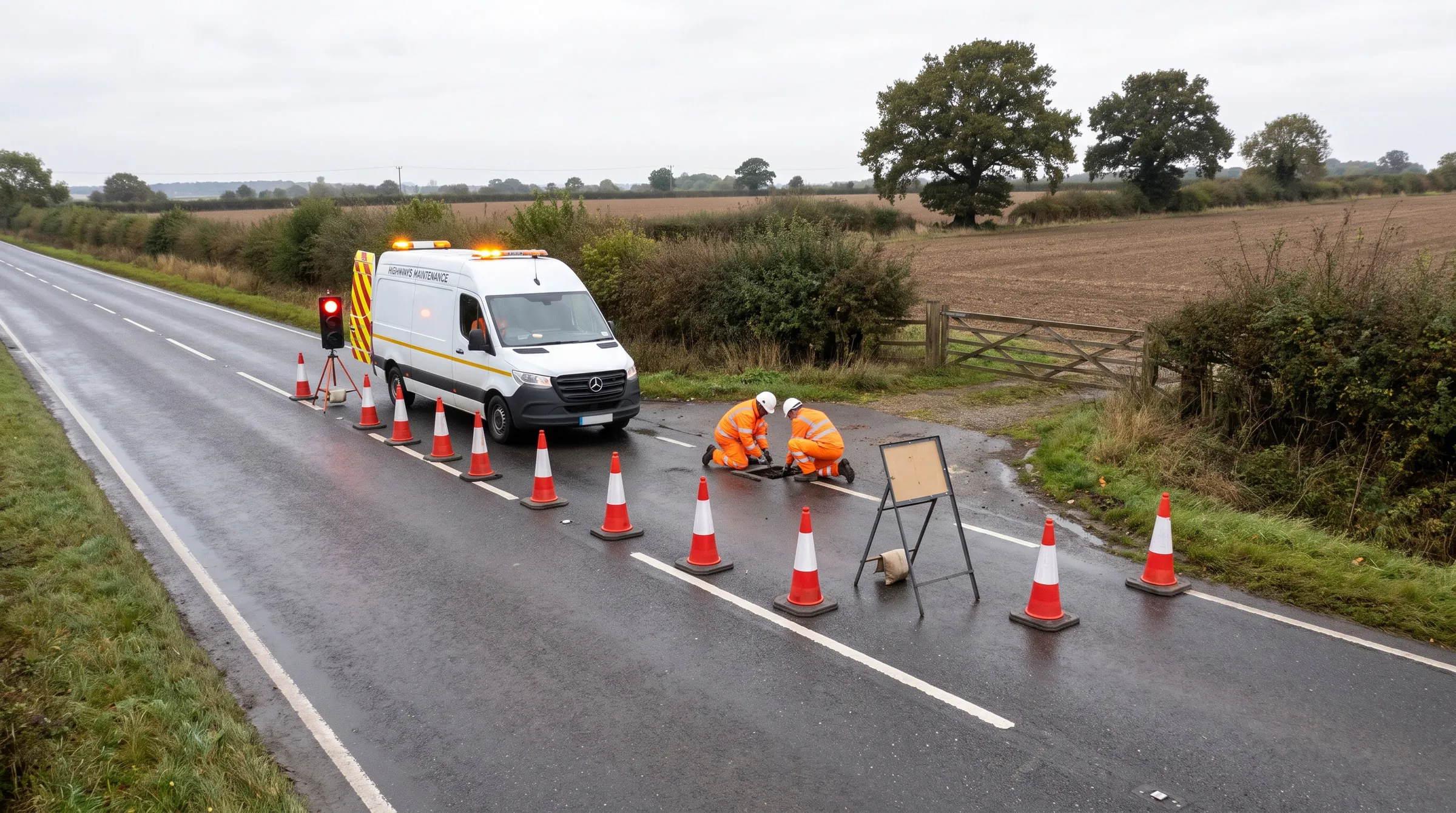
- Reduced travel
- Geographic clustering directly reduces the distance travelled per completed repair. Travel is both the largest recoverable productivity loss and a straightforward source of avoidable emissions.
- Reduced plant idling
- Sequencing that keeps plant working rather than waiting reduces fuel burn per unit of output as well as improving cost per repair.
- Fewer mobilisations
- Working through a dense area once, rather than returning to the same locality repeatedly, removes whole journeys from the programme.
- Appropriate intervention
- Selecting a treatment that lasts avoids the material, plant and traffic management associated with repeat intervention at the same location.
- Reduced disruption
- Shorter working durations mean shorter periods of restriction, which reduces queuing, stop-start running and the emissions associated with them.
- Longer asset life
- Timely, well-specified localised repair defers larger, more carbon-intensive resurfacing interventions.
Reporting
What we measure.
Where a client's own reporting requires it, these are the measures we capture and provide.
- Distance travelled per completed repair
- Fuel or energy consumed per completed repair
- Repairs completed per mobilisation
- Repeat intervention rate at previously repaired locations
- Material volumes used against work delivered
- Waste arisings and their disposal route
- Duration of traffic management per intervention
As the fleet and material supply arrangements are specified, lower-emission plant and material options are being assessed on their operational merits alongside cost and durability. We will describe what has actually been adopted rather than what was considered.
Next step
Environmental reporting requirements?
If your programme carries specific environmental or social value reporting obligations, tell us what they are and we will confirm what we can capture.