Safety & quality
The standards work is planned against.
Specialist repair capacity is only useful if it can be delivered safely and to specification. These are the principles work is planned against.
On accreditations and approvals. We do not list scheme memberships, certifications or supplier approvals on this website, because listing credentials that are not yet held would be misleading.
Applicable competence, supplier approvals and accreditations will be obtained and maintained according to contract requirements. Supplier and operative requirements are established against the specific scope of work and principal contractor requirements. We will confirm our current position openly and in writing as part of any pre-qualification or enquiry.
Safety
Planned, briefed, recorded.
Roadworkers operate alongside live traffic. Everything below exists because of that.
The order matters. Work has to be safe, then correct, then durable, before its efficiency is worth discussing at all.
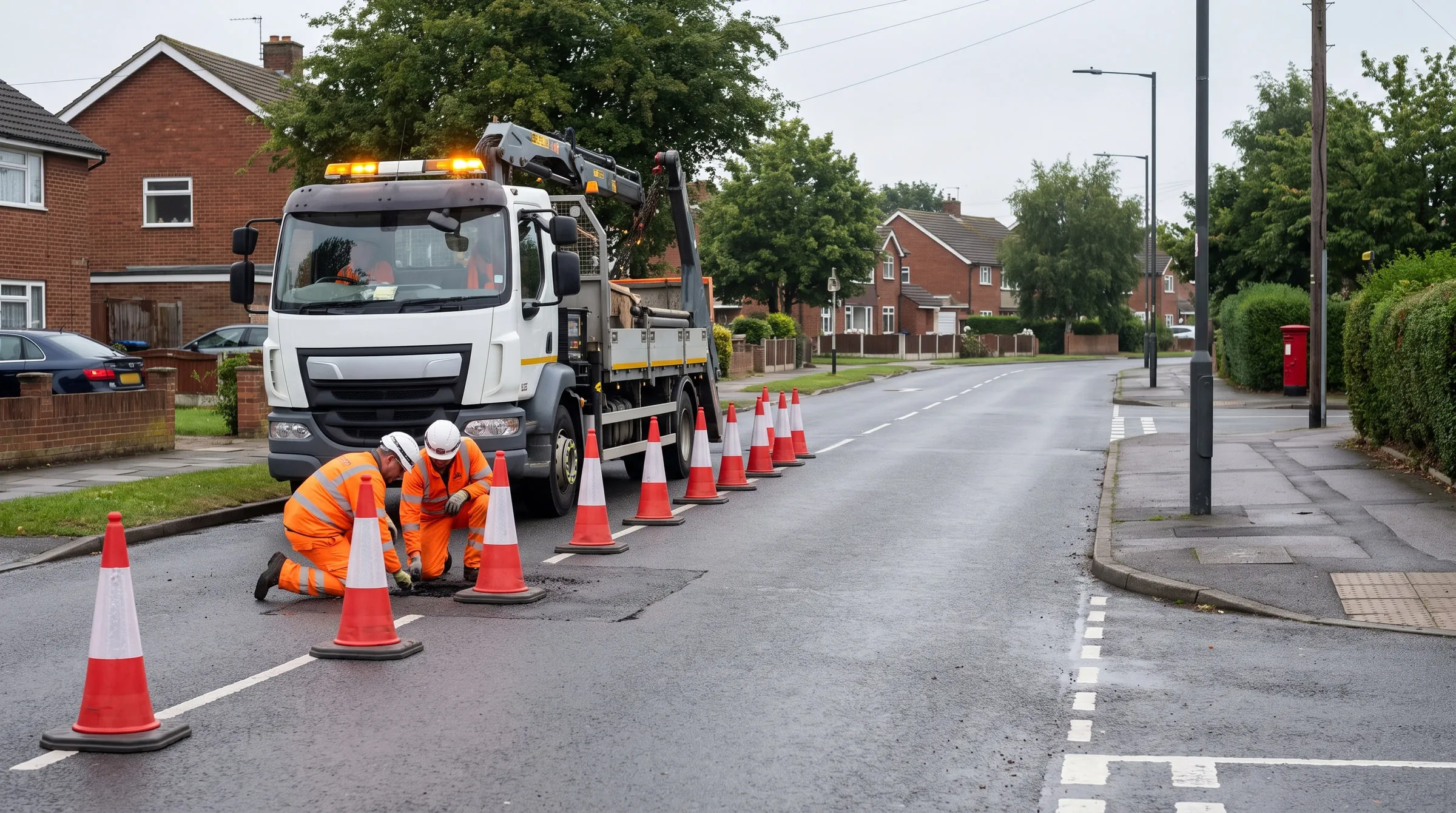
- Safe system of work
- Every activity is planned against a defined safe system of work covering the task, the road environment, the plant in use and the people involved. Work does not proceed where the system cannot be established on site.
- Competent personnel
- Operatives and supervisors hold the competences required for the work they undertake and the traffic management arrangements in place. Requirements are set against the specific scope and road environment — including street works competence under the New Roads and Street Works Act regime and the signing, lighting and guarding requirements of Chapter 8 of the Traffic Signs Manual — rather than assumed.
- Appropriate temporary traffic management
- Traffic management is designed for the site, the road hierarchy, the traffic conditions and the duration of the activity, in accordance with the applicable standards and permit conditions. Short duration working is used where it is suitable, not by default.
- Road user and workforce safety
- Work is planned to protect both the crew and the people passing through or around the site. Provision for pedestrians, cyclists and vulnerable road users is designed as part of the working arrangement rather than left to chance.
- Task specific RAMS
- Risk assessments and method statements are produced for the specific task and location rather than reissued generically, and are briefed to the crew before work starts.
- Equipment inspection and maintenance
- Plant and equipment are inspected, maintained and recorded against a defined regime. Defective equipment is removed from service.
- Incident reporting
- Incidents, near misses and unsafe conditions are reported, investigated proportionately, and used to change the way work is planned.
Quality
A repair that has to be done twice was not cheaper.
Productivity that produces repeat intervention is not productivity. Quality measures are treated as part of the output measure, not as a separate concern.
Performance should therefore be measured not only by interventions completed, but by accepted repairs that do not require unnecessary repeat visits.
- Material specification
- Materials are specified against the client’s requirements and the selected repair method, with supply arrangements traceable to the material used.
- Method suitability
- Where a defect in an allocated pool appears unsuitable for the specified method, it is referred back rather than repaired inappropriately.
- Quality evidence
- Each completed intervention carries location, timestamp and before and after records, so that acceptance does not depend on re-inspection alone.
- Repeat intervention tracking
- Returns to previously repaired locations are tracked, because repeat intervention is the clearest available signal of a method or workmanship problem.
- Review and improvement
- Quality and safety data are reviewed against programme performance, and the operating approach is adjusted where the evidence supports it.
Integration
Working within your arrangements.
Where Stonegate Infrastructure operates as a subcontractor, the principal contractor's safety management arrangements, permit processes and assurance requirements take precedence. Our internal processes sit inside those arrangements rather than running in parallel with them.
That includes site induction and access requirements, permit and coordination processes, incident reporting routes, and the evidence formats your assurance team already uses. Where you require a specific system of record, we work within it.
Next step
Pre-qualification questions welcome.
If you need our current position on competence, insurance, approvals or method statements in order to assess us, ask directly and we will answer it straight.