Selection

Rapid methods are a tool, not a policy.

The correct intervention depends on defect dimensions, surrounding pavement condition, traffic loading, access and the required durability. Rapid methods should be used where appropriate rather than applied indiscriminately.

A contractor that presents one repair technology as suitable for every defect is describing its plant, not its engineering judgement. Applying a rapid method to a defect that requires structural repair produces repeat intervention, avoidable cost and reputational exposure for the client.

The client determines the defects requiring intervention and the standards that apply. Our responsibility is to deliver those repairs efficiently, to specification, and to flag where a defect in the pool looks unsuitable for the method proposed.

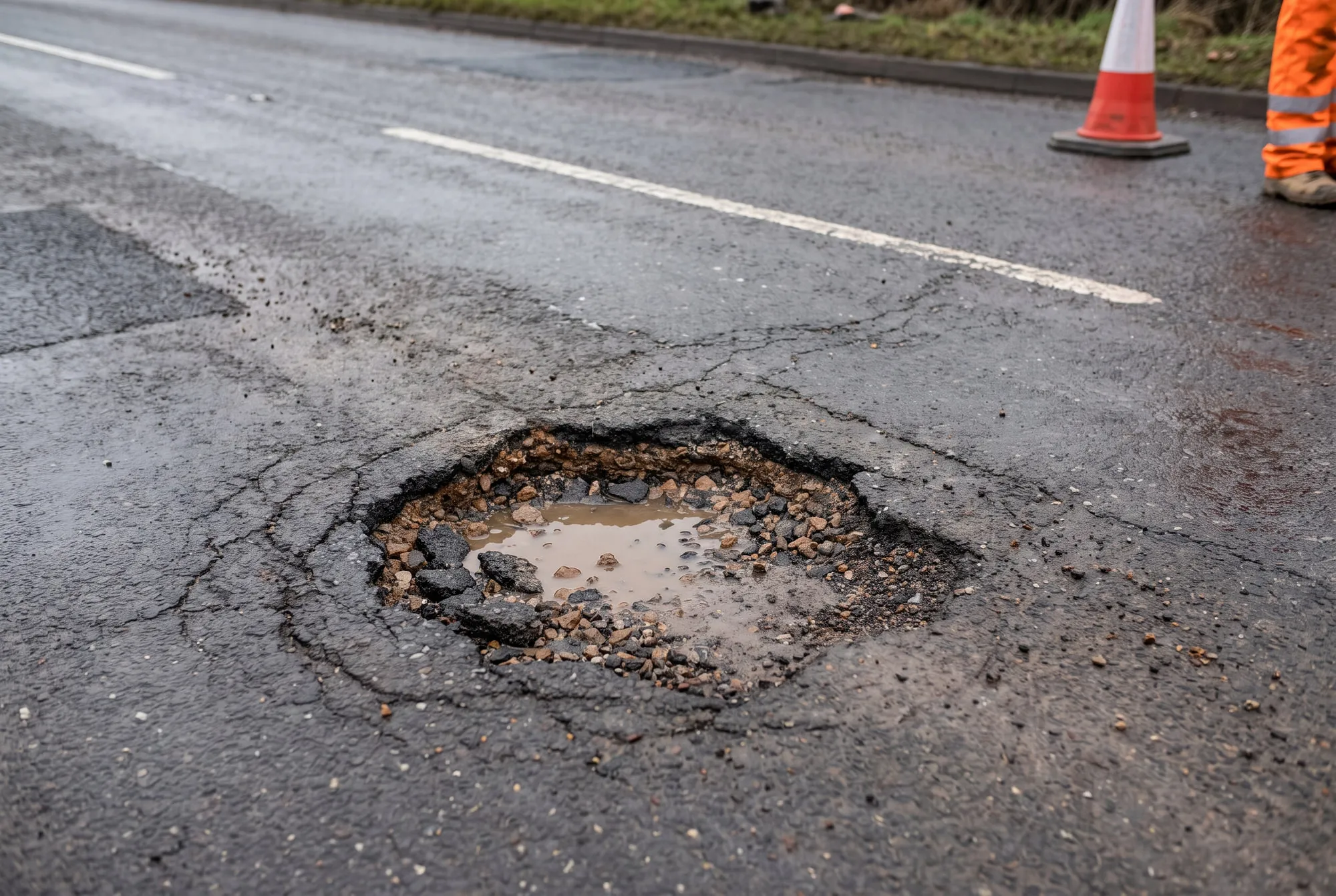
Close inspection photograph of a carriageway pothole in British asphalt before repair, showing fractured edges, layered depth and fatigue cracking around the defect.
Defect assessment determines the method; the method does not determine the assessment.

Repair methods

What we provide

Each method has a defined envelope of suitability. The notes below set out where each is appropriate and what constrains it.

01

Pothole repairs

High volume repair of individual carriageway defects.

Suited to discrete defects that meet the client’s intervention criteria. The commercial and operational value comes from density: repairing many defects within a tight geographic area in a single working period rather than mobilising repeatedly for isolated instructions.

Selection considerations

  • Defect dimensions and depth
  • Condition of the surrounding surface course
  • Traffic loading and road hierarchy
  • Required durability and warranty position
02

Spray injection patching

Rapid application of aggregate and bituminous binder.

A productive method for suitable defects, surface deterioration and edge failures, particularly on rural and lower-hierarchy roads. Output rates can be high where defects are clustered and access is straightforward. It is not a substitute for structural repair where the pavement has failed below the surface course.

Selection considerations

  • Surface-level deterioration and shallow defects
  • Dry or manageable surface conditions
  • Clustered rural and estate road programmes
  • Not appropriate where the base has failed

03

Localised carriageway patching

Defined area patching for a longer-life intervention.

Where a defect sits within a wider area of deterioration, patching a defined area produces a more durable outcome than repeated individual repairs. This is the appropriate treatment where repeat intervention at the same location is likely.

Selection considerations

  • Areas of interconnected cracking or fatigue
  • Locations with a history of repeat intervention
  • Higher traffic loading
  • Where a longer service life is specified

04

Rapid defect interventions

Short duration response within a wider programme.

Where a client requires defects addressed quickly against a service level, interventions can be delivered as part of a routed daily programme rather than as isolated call-outs. This keeps response performance and productive utilisation aligned rather than in conflict.

Selection considerations

  • Category and service level driven response
  • Integration with a wider routed programme
  • Evidence captured against each intervention
  • Appropriate temporary traffic management

05

Preventative localised treatments

Intervening before a defect becomes a failure.

Where appropriate and where the client’s asset strategy supports it, treating deterioration before it develops into a reportable defect reduces future intervention volume and supports the lifecycle plan for the asset. This is offered as a considered option within a programme, not as a default.

Selection considerations

  • Early-stage surface deterioration
  • Locations identified through inspection data
  • Supports asset management objectives
  • Applied selectively, not indiscriminately

Permanent repair

A defect made safe is not a defect repaired.

The distinction matters to the programme, and it is often where repeat intervention quietly accumulates.

Where a defect requires attention against a short response time, the first intervention may be a temporary make-safe repair. That is a necessary and legitimate step, but it leaves a permanent repair still to be programmed — and where authority policy is to programme that follow-up treatment as a lower priority defect, those follow-ups accumulate into a population of their own.

Clearing that population is precisely the kind of dense, geographically defined work this delivery model is built for. It is also work that benefits from being sequenced deliberately rather than reacted to.

Where the defect, the method and the service level allow it, we would rather complete a durable repair at the first visit. A second visit consumes traffic management, travel and crew time that the programme has already paid for once — and, from the road user's point of view, means the same length of road disrupted twice.

Traffic management

Reducing disruption

Shorter working durations mean shorter periods of restriction for road users, and a smaller footprint on the network.

Suitable defects may be completed using short duration working arrangements with appropriate temporary traffic management. Where that is achievable, traffic disruption can be substantially reduced compared with larger conventional interventions requiring extended closures.

Many suitable individual interventions can be completed rapidly, allowing crews to move efficiently through geographically concentrated work. That is the mechanism by which programme-level disruption falls: not because any single repair is instantaneous, but because the crew is not repeatedly setting up, breaking down and travelling.

To be clear about what this does not mean. Temporary traffic management is always required where the work and the road environment demand it, and it is designed against the site, the traffic conditions and the applicable standards. Intervention durations vary with the defect, the method and the location. We do not publish a single headline repair time, because a figure of that kind is not meaningful across a real programme.

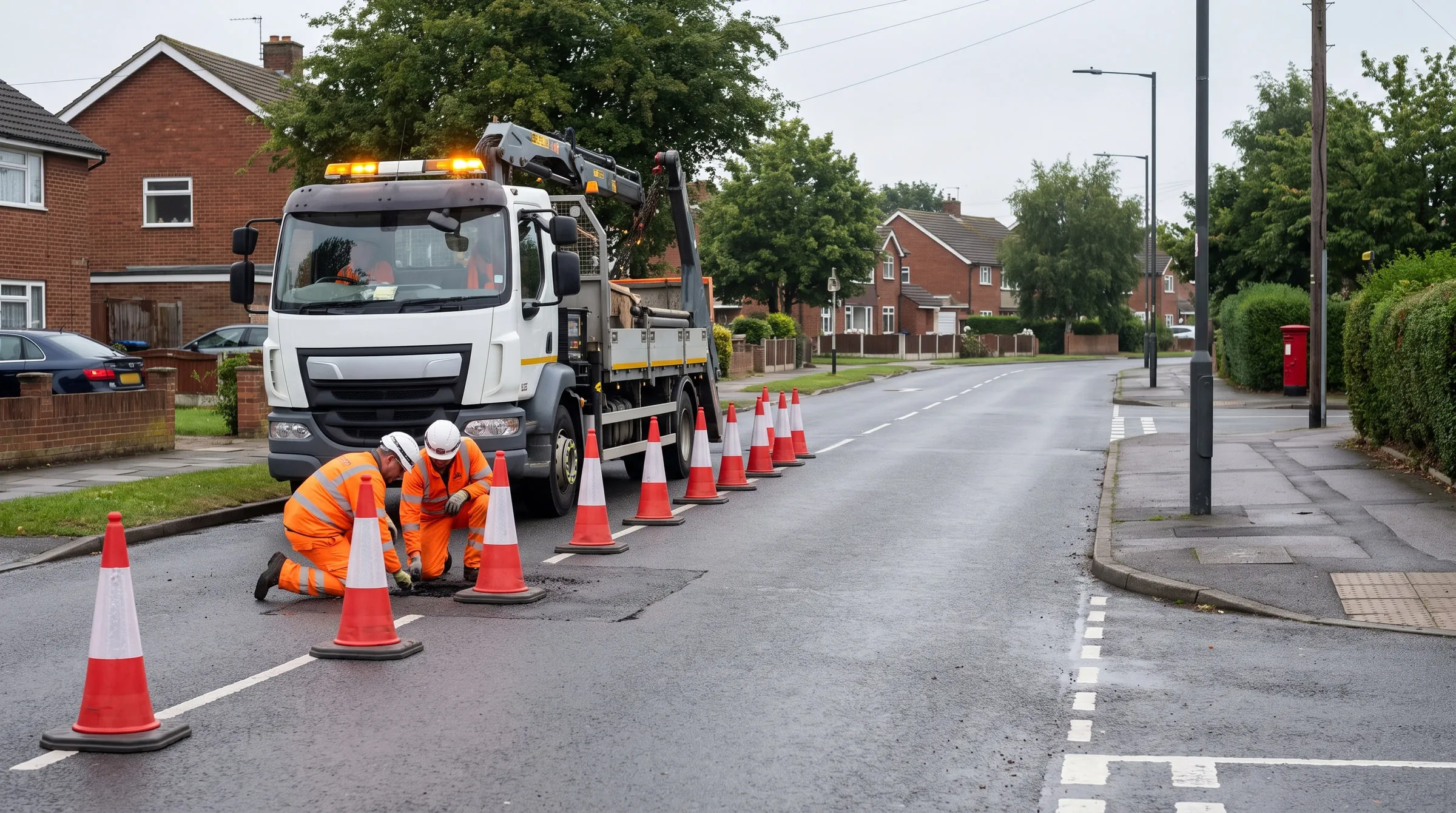
Highways operatives working at a carriageway defect inside a coned-off lane closure on a British suburban road, with a truck-mounted repair unit and a tapered line of traffic cones.
Short duration working under appropriate temporary traffic management.

Evidence

Every intervention, recorded.

Repairs that cannot be evidenced create assurance work for the client. Each completed intervention is intended to carry the records needed to demonstrate what was done, where and when.

Those records have a use beyond our own reporting. Structured evidence of what was repaired, where and when supports acceptance of completed work, response to enquiries about specific locations, the authority's handling of third party claims relating to carriageway condition, and the published reporting on maintenance activity that highway authorities are now expected to produce.

Location
Coordinates recorded against the defect reference.
Timestamp
Time of completion captured at the point of work.
Condition record
Before and after imagery for each intervention.
Programme reporting
Output and progress reported in a format agreed with the client.
Close detail of specialist rapid patching equipment applying aggregate and bituminous binder into a prepared asphalt carriageway defect.
Aggregate and binder applied to a prepared defect.
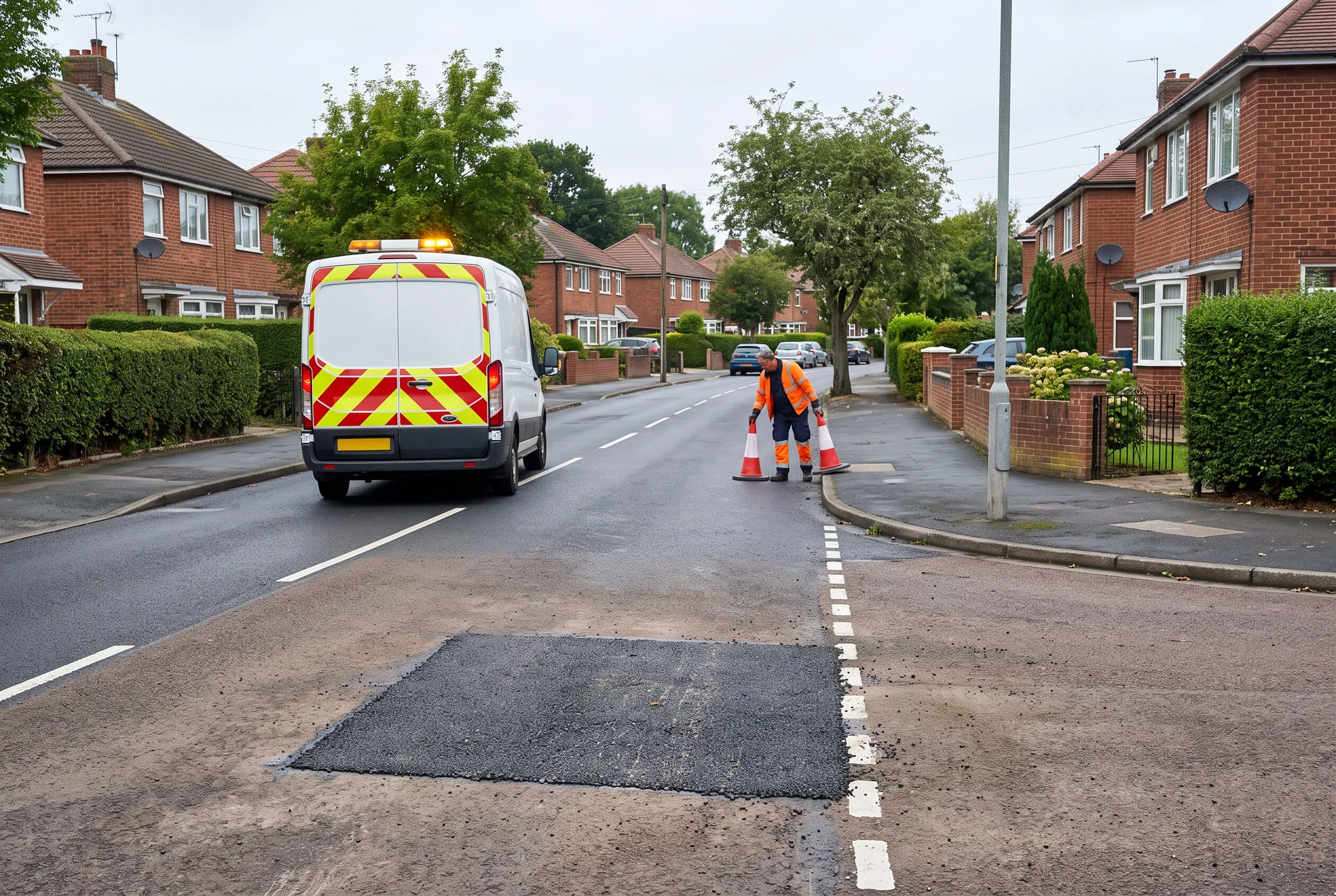
A cleanly completed localised asphalt carriageway repair with sealed edges, flush with the surrounding road surface.
Completed repair, work area cleared.

Next step

Tell us what is in your defect pool.

Volume, geography, defect categories and the standards that apply. We will tell you which methods are appropriate and how we programme the work.